












 SECURITY & DATA PROTECTION
How Scality secures the data you store.
Protecting data that cannot be lost takes more than one safeguard. It comes down to three things working together: the architecture that stores the data, the engineering discipline that builds the software, and the standards the platform is held to. This page walks through all three, starting with the threats they exist to stop.

The architecture
CORE5
Five layers of defense, each holding when the one above it is bypassed.
THE SOFTWARE
How we build it
Inspectable, standards-based software, maintained for a decade-long support horizon.
THE STANDARDS
Standards & compliance
Built for the financial, data-protection, and sovereignty rules you operate under.
The threat model
What a storage platform has to survive.
Attackers rarely go after the disks directly. They compromise an identity, escalate their privileges, and turn the platform's own commands against it. A storage platform earns its place by holding data when the layers above it have already been breached.

96%
of ransomware attacks now involve data exfiltration. Blocking deletion is no longer enough; a stolen copy has to be unreadable.
89%
of organizations had their backup repositories targeted by an attacker in the past year. The backup is a primary target, not a safety net.
 THE ARCHITETURE
The first answer is an architecture: CORE5.

WHAT IT PROTECTS

WHAT IT PROTECTS

WHAT IT PROTECTS

WHAT IT PROTECTS

WHAT IT PROTECTS

How we build it
Security also follows from how the software is built.



what it protects
The promises we keep for the data you store.
Practical guide
Data security best practices for object storage.
To close, a short and practical guide for teams responsible for protecting large data estates. These practices apply to any object storage platform, and Scality is built to support each of them.


Enforce least privilege and MFA
Give every identity the minimum access its role needs, and require multi-factor authentication for administrative actions. Review access rights regularly and revoke stale accounts. The smaller each credential's reach, the smaller the damage when one is compromised.
Encrypt in transit and at rest
Encrypt traffic to and from storage, and encrypt data on disk so a stolen drive or an exfiltrated copy is useless without the keys. Manage keys deliberately, and keep them separated from the data they protect.
Make backups immutable, and keep a copy out of reach
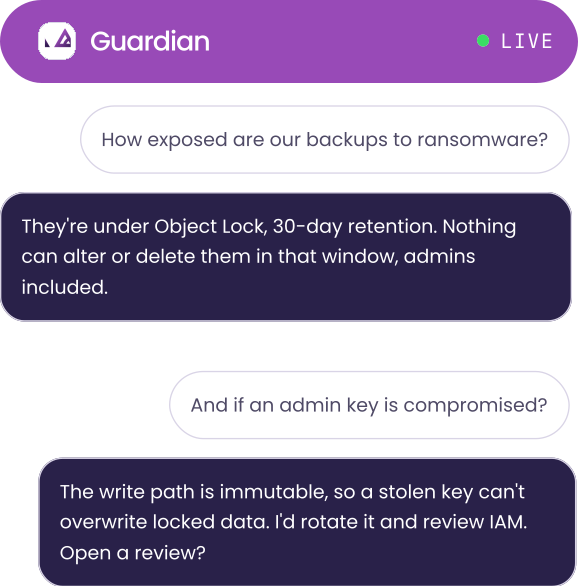
Apply retention locks so backups cannot be altered or deleted inside the retention window, even by an administrator. Keep at least one copy air-gapped or otherwise isolated, so ransomware that reaches production cannot reach your last line of recovery.
Test recovery, not just backup
A backup you have never restored is an assumption, not a safeguard. Rehearse recovery on a schedule, measure how long it actually takes, and confirm the restored data is complete and clean. Recovery time is the number that matters during an incident.
Separate duties and watch for anomalies
Split critical roles so no single account can both weaken protections and delete data. Watch for unusual access patterns and unexpected deletions or retention changes, and make sure someone is accountable for acting when an alert fires.

Bring your threat model. We'll show you the storage.