














 Scality Ecosystem & Application Partners
Scality and F5.
F5 in front of Scality. Predictable S3 latency under heavy load and security applied at the gateway, so AI and backup traffic stop breaking the data path.

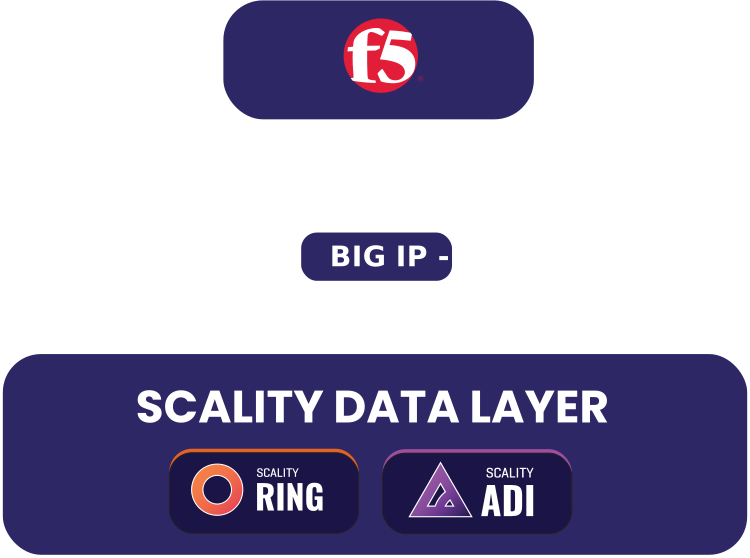

the problem
AI traffic patterns put pressure on the path to object storage.
S3 throughput at scale needs careful path management. Security has to ride the data path. Legacy load balancers were not built for the bursty, high-throughput patterns AI workloads create.
- Legacy load balancers misroute S3 traffic at scale.
- AI workloads are bursty and high-throughput.
- Security retrofitted at the edge stays fragile.
- Predictable latency matters more than peak throughput.
 the joint solution
F5 in front of Scality, validated for AI data delivery.
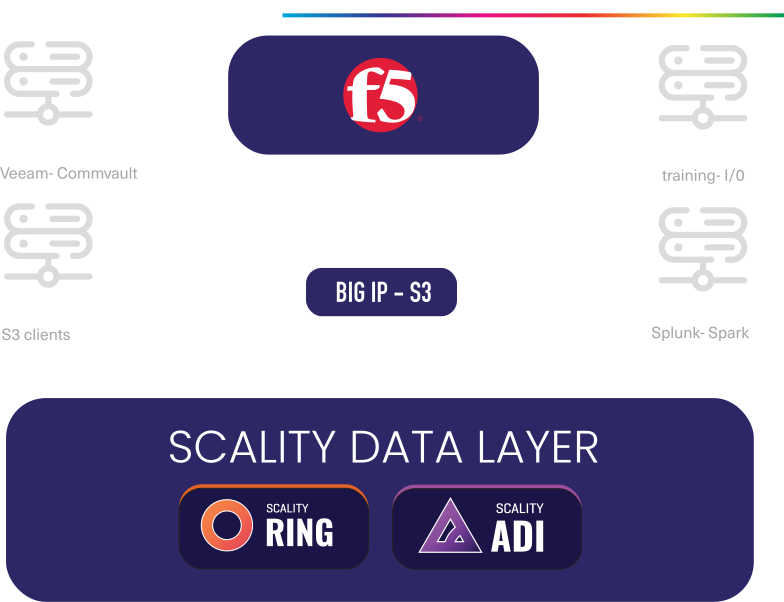
F5's Application Delivery and Security Platform handles S3 traffic at scale. Scality RING is the storage layer; ADI frames the AI data path that BIG-IP delivers traffic to. Security, traffic management and application delivery applied at the gateway, before the storage layer.
- Validated joint architecture.
- F5 BIG-IP in front of Scality RING.
- Scality ADI as the AI data layer behind the gateway.
- Security applied at the data path, not bolted on.
joint solution benefits
What the joint architecture delivers.

No single point of failure.
F5 eliminates single points of failure on the data path with health-aware load balancing and DNS control. Scality contributes self-healing storage. Both layers fail gracefully.

Security at the data path.
WAF, DDoS protection, and policy-driven access controls applied directly to S3 traffic. CORE5 cyber resilience continues on the storage layer.

Performance under pressure.
TLS offload and hardware-accelerated crypto on F5 keep latency predictable. Scality absorbs the throughput. AI ingest and backup windows stop being capacity crises.

One foundation, many use cases.
AI training and inference. Multi-site data protection. Hybrid-cloud storage. Long-term retention. The same joint architecture covers each one.
Joint architecture
How F5 runs on Scality.
Workloads flow through the partner integration and land on the Scality data layer.

Show us the workflow. We will show you the fit.